Reducing carbon dioxide, CO2, emissions has led EFRC scientists to investigate creative ways to trap and utilize the pollutant before it enters the atmosphere. Fossil fuel processing plants and other energy production sites are responsible for major CO2 emissions. Consequently CO2 capture at these sites is essential. The Center for Gas Separations Relevant to Clean Energy Technologies can separate CO2 from hydrogen using selective high-surface-area metal-organic frameworks. This process is essential for use in pre-fuel processing CO2 capture.
Scientists at the Center for Nanoscale Control of Geologic CO2 take the opposite approach and focus on carbon capture post-fuel processing with the help of peptoids. Peptoids, protein-like molecules, increase the rate of mineralizing CO2 by 23 times, eclipsing previous compounds’ rate increase of 1.5. The NCGC is working to reduce greenhouse gas emissions by diverting the CO2 that is produced and converting it into calcium carbonate before it becomes a pollutant.
In the geologic subsurface, natural processes convert CO2 into carbonate minerals, but these processes are slow and hard to control. Yet in nature, carbonates are also produced by some sea creatures, which utilize proteins to build their shells quickly and at will. Jim DeYoreo, biomineral expert, and Ron Zuckermann, peptoid inventor, combined their expertise to design peptoids that mimic those proteins. Peptoids have nitrogen-containing backbone structure of proteins and are just as selective as proteins, but more stable.
Along with their colleagues, they alternated water-loving carboxylic acids and water-hating substituted phenyl groups along the peptoid’s carbon-nitrogen backbone.
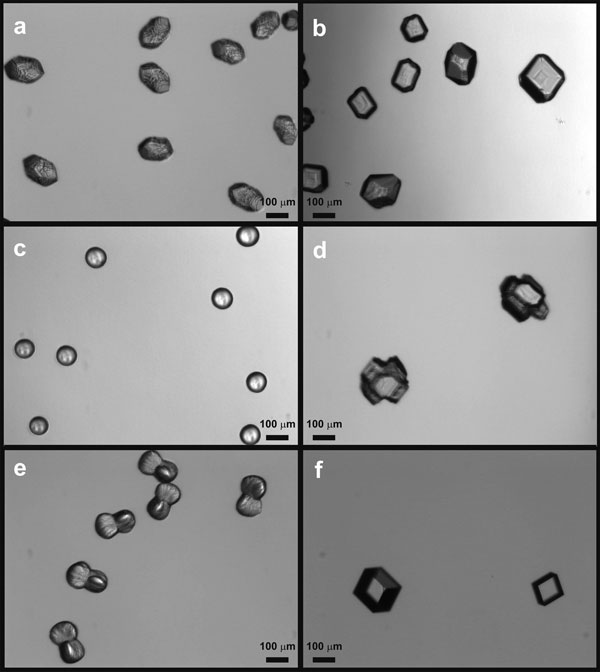
Manipulating aspects of the peptoid chain caused calcium carbonate crystals to grow shaped like crosses, spheres, spindles and paddles. Small changes in the chemistry, specifically the functional group pattern, phenyl substitutions, and the quantity of carboxylic acids, made big differences in structure and importantly, to the rate at which CO2 was trapped. This rate is known as the growth speed. Some peptoids increased growth speeds by 23-fold at extremely low concentrations of peptoid, while other configurations made no impact on the rate. Calcium carbonate growth rates were measured under an atomic force microscope.
While mechanisms for calcium carbonate growth were presented, scientists still plan to define the factors that affect rate and morphology. “Sea creatures can make carbonates at will. It would be great to have a knob that we could turn to speed up or slow down growth,” says DeYoreo. Controlled CO2 sequestration will keep air and earth CO2 in balance.