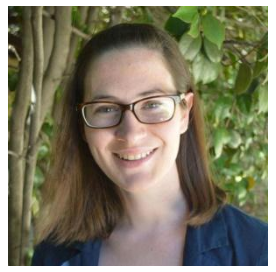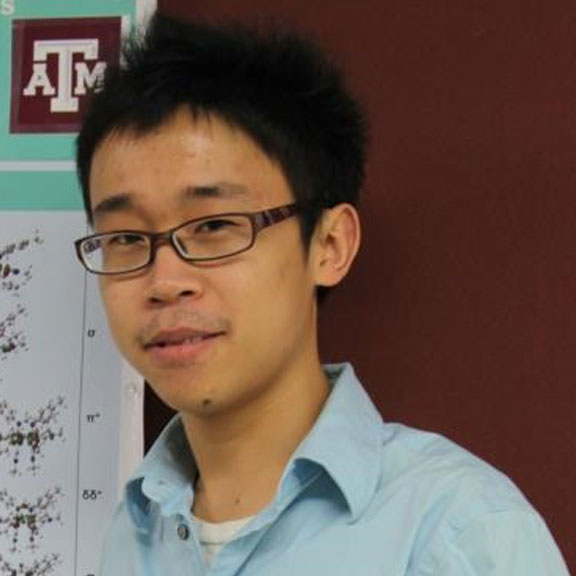
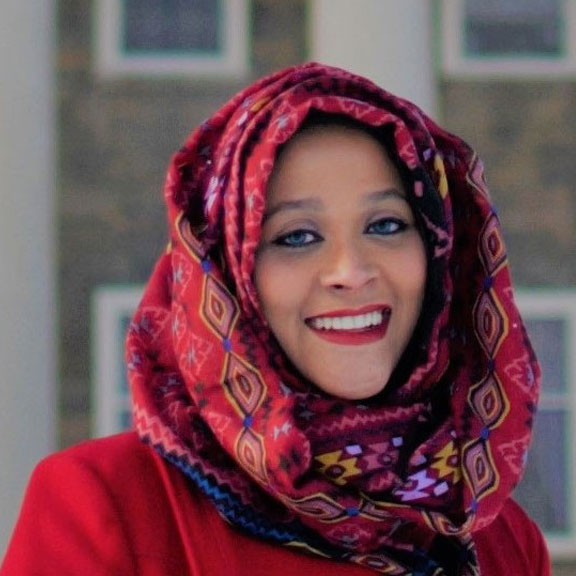
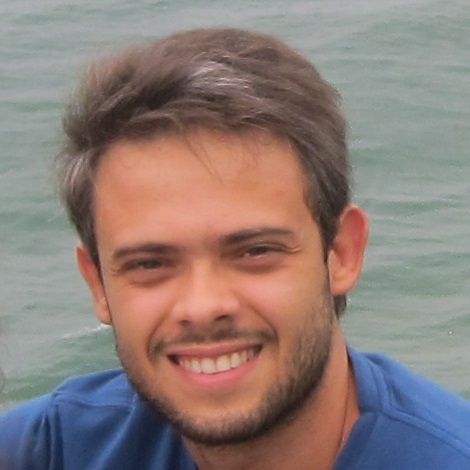
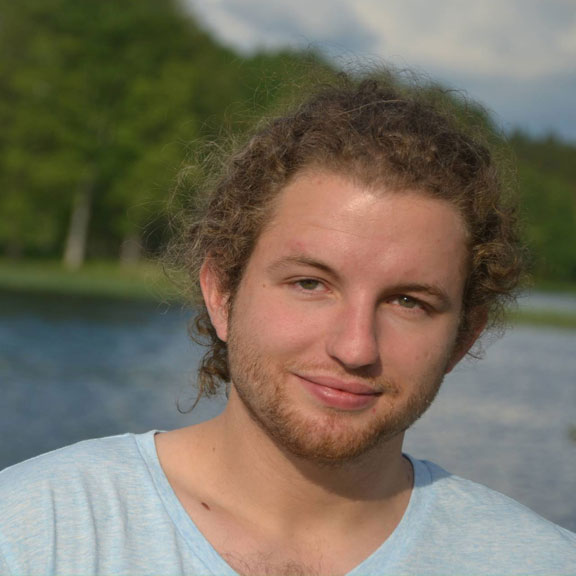
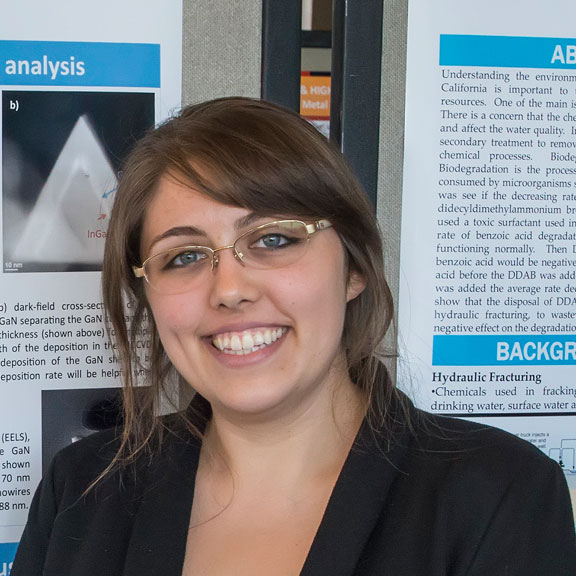
It’s 3 a.m. You are awake waiting for the cab to take you and your luggage to the airport. You were just in the lab eight hours ago, and now you are headed to the lab again. This time, however, it’s in a different town, in a different state, in a different time zone. How long will you go? It could be days, weeks, months or even years. This is a familiar scene for many graduate students and postdocs branching out in their careers to develop new skills, establish interdisciplinary collaborations and further their professional development. Five scientists from four Energy Frontier Research Centers (EFRCs) share their experiences traveling for specific learning and networking opportunities. These are the faces of some of tomorrow’s innovative leaders in energy science who have found rewarding opportunities through travel.
Li (ICDC), Ludo (UNC) and Renato (UNC) traveled to the U.S. for their postdocs, and they each contribute to the implementation and progress of fundamental research at their respective EFRCs. Their exposure to new scientific concepts and interdisciplinary collaboration is made possible through their travel to and appointment at these EFRCs.
Li: “I have been synthesizing and characterizing new catalysts. … In collaboration with the beamline scientists at Argonne, we’re trying to figure out the structural information of these materials.... Providing [this] information to the theorists in the center will help them improve the theoretical model they build.”
Ludo: “[I] serve as the point of contact for synthesis efforts across the center [and] collaborate with EFRC faculty, staff, postdocs and students in developing new and more efficient approaches for synthesis and characterization of compounds and materials needed for [solar cell] projects.”
Renato: ”Within the EFRC, my research efforts foster a broader understanding of the photophysics and photochemistry of heterogeneous water oxidation photocatalysis [needed to develop solar fuels].”
Zoey traveled to Sandia National Laboratories to get hands-on experience with developing a new transmission electron microscopy (TEM) method — skills that she has brought to the University of Maryland side of the NEES EFRC.
Zoey: “Our group is developing in situ TEM electrochemical experiments for use in our microscopes to be able to study the battery electrode materials we develop at NEES under real battery conditions (i.e., a liquid environment). Previously, I was only able to perform dry, vacuum-compatible experiments with our holders. … My travel experience allowed me to actually perform my first liquid cell TEM experiment, which was exciting!”
Sabrina traveled to the American Institute of Chemical Engineers conference to present her CBES research, engage in the scientific communication process and get feedback from other U.S. scientists.
Sabrina: “I shared a new approach for engineering motion of active colloids guided by their shape and symmetry, and got valuable comments from the experts. In the same session, I got to know about the latest research led by some of the distinguished professors in this area.”
Each early career scientist agrees that travel is an important aspect of furthering one’s career path and that its benefits manifest in myriad ways.
Li: “[In grad school,] I was trained as a molecular chemist; everything is in the solution phase. As a postdoc, I have learned a lot of things about heterogeneous catalysis. [When I am a university professor,] I am hoping to build a program that is the perfect combination of both worlds.”
Zoey: “For many scientists, the work they do is very technical and highly specialized. … The most efficient way to share knowledge and techniques is through these sort of travel experiences.”
Ludo: “You must get out of your comfort zone and try new things, discover new things, in order to get to know yourself better, mature, and become a stronger person. This is one of the most important aspects that changing location brought me.”
Sabrina: “When I first [started] graduate school, I was not necessarily a great public speaker. Over the years, I realized how important it is to share your research, struggles, new findings [and] any interesting observations with … peers in [the] scientific community.”
Renato: ”At each different location, you may learn a different technique, a different science, or a different way of thinking that you didn’t have before. … Although we focus on the fundamental aspects that govern the mechanisms of this science, it makes you think forward to a future that concerns us all, [especially] when [it] comes to [creating] a sustainable world with clean and renewable energy sources.”
At EFRCs across the country, graduate students and postdocs travel to gain new insight into research and communication methods. These travel experiences improve our research efforts towards understanding fundamental aspects of clean energy technologies by bringing together multiple perspectives to tackle one problem. Travel allows us to contribute to the advancement of scientific knowledge, maintain U.S. leadership in science and discover new solutions to today’s energy challenges.