
A new method for preparing titanium dioxide thin-film electrodes yields efficient solar cells and greatly reduces the number of fabrication steps. The films are highly transparent, making them ideal for use in dye-sensitized solar cells where maximum light penetration to the photosensitive dye is critical. When coupled with the popular ruthenium-based molecular dye, N719, the electrodes produce high photocurrent densities (17.7 mA cm-2) and have a light-to-electrical energy conversion efficiency of 9.6%, about 1.4 times greater than photoelectrodes prepared using commercial titanium dioxide particles. This work, conducted by the Argonne-Northwestern Solar Energy Research Center, greatly simplifies thin-film fabrication for use in dye-sensitized solar cell electrodes without compromising overall efficiency.
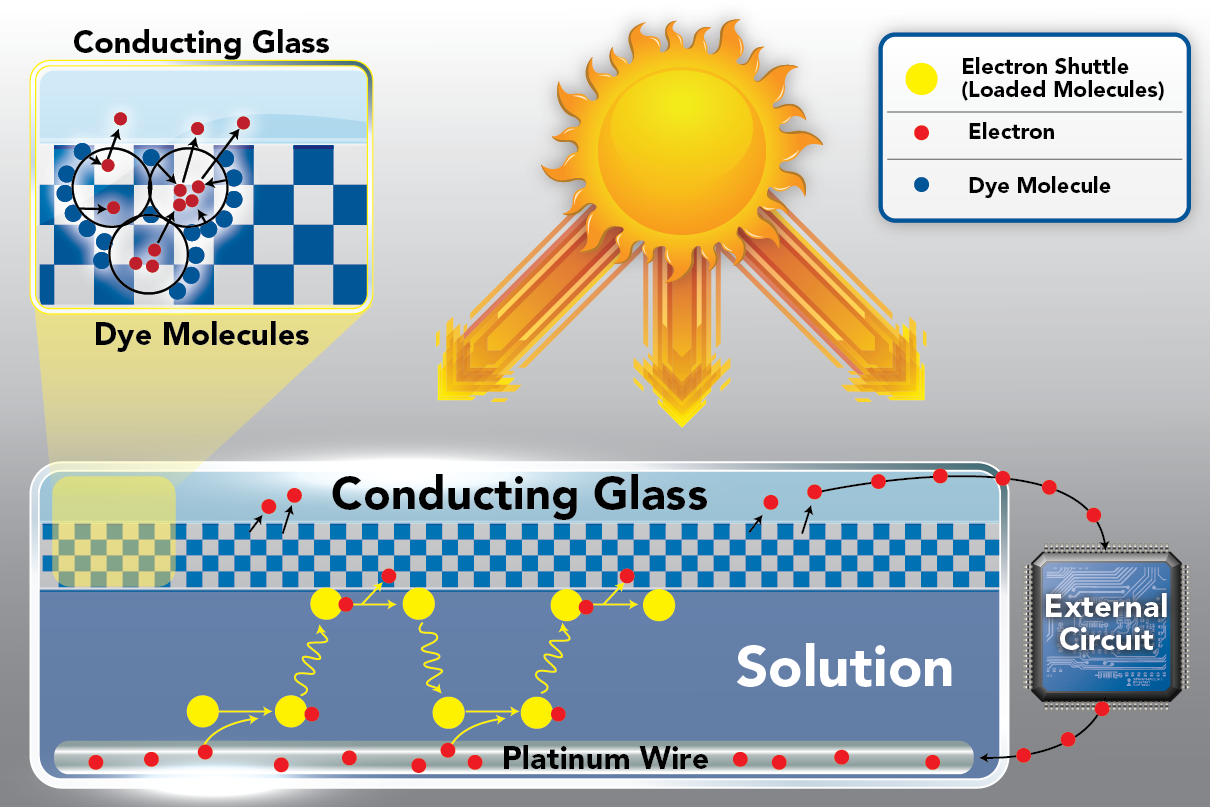
Challenges in thin film fabrication: Dye-sensitized solar cells represent one of the most promising advances in solar energy conversion science. A critical component of the dye-sensitized solar cell is a thin semiconducting film that bridges the photosensitive dye molecules to the metallic electrode. The quality of this film is determined in part by particle size, transparency and degree of electrical connectivity. Titanium dioxide nanoparticles are commonly used; however, these films can often yield poor results and are cumbersome to prepare, largely due to particle agglomeration.
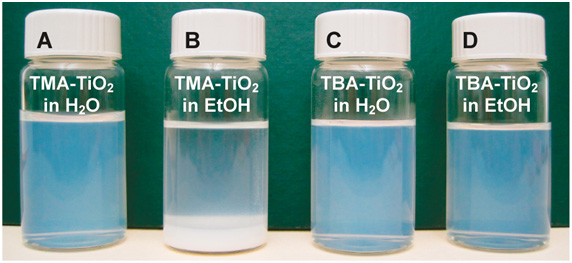
Solving the problem: Titanium dioxide particles are generally hydrophilic, which ensures adequate dispersion in aqueous solutions, but agglomeration as the film dries diminishes overall transparency, thereby reducing the solar cell’s efficiency. Pastes prepared in hydrophobic environments can yield better results, but also cause the particles to agglomerate, requiring a number of intermediate steps to achieve adequate dispersion. Lead author, Nak Cheon Jeong, eliminated these steps by coating the particles with hydrophobic tetraalkylammonium ions, giving them both hydrophilic and hydrophobic characteristics; i.e., the particles are amphiphilic. In addition, the particles used were ~9 nanometers in size, yielding superior transparency and high energy-conversion efficiency.
While there are dye-sensitized solar cells that have yielded higher efficiencies, around 11%, using the N719 dye, the work described in this article provides a simple method to produce highly transparent films that also yield highly efficient dye-sensitized solar cells. The simplicity of this method will prove useful to scientists and greatly facilitate progress in solar energy-conversion science.