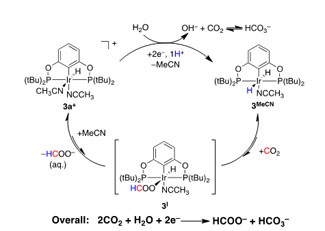
A new molecular catalyst orchestrates a chemical reduction process where, by definition, electrons react with CO2 to form the molecule formate (HCOO-), which can serve as a fuel or a precursor to fuels such as methanol. The catalyst is highly efficient, creating formate 85 percent of the time at an unprecedentedly fast rate, twenty CO2 molecules converted per second, which is 380 percent greater than previous reports. Designed by the Solar Fuels Energy Frontier Research Center at the University of North Carolina at Chapel Hill, the catalyst contains a central iridium atom that drives the reduction reaction and sets a new standard for converting CO2 to formate.
Water Plays a Key Role: When the catalyst is placed in acetonitrile with 5 percent H2O, CO2 reduction occurs at about -1.2 V vs a normal hydrogen electrode. This relatively low potential is partially because water stabilizes, via a process called solvation, the negatively charged formate product, generating a positively charged iridium intermediates that is easier to reduce. This increases the catalytic rate and lowers the amount of energy required to reduce the CO2.
Why Formate? To become a primary source of energy, solar radiation will need to be stored on massive scales. The only realistic option is storing the energy in chemical bonds with the energy of the sun used to carry out chemical reactions that produce "solar fuels" for storage and later use when the sun is unavailable. Formate is a desirable target because it can serve multiple purposes, either as a fuel in its own right, a material to store hydrogen fuel or as a precursor to methanol fuel production.
Until now, catalytic reduction of CO2 to formate using molecular catalysts was a largely inefficient process often accompanied by byproducts such as carbon monoxide and hydrogen, leading to poor overall yields. Hydrogen is an especially common byproduct because water is much easier to reduce than CO2. The iridium catalyst described in this work overcomes many of these hurdles, making formate a now viable option towards the realization of an alternative energy economy.